Partners & Collaborations
So You Want to Be a Mechanical Engineer? Learn from Someone Who’s Done It
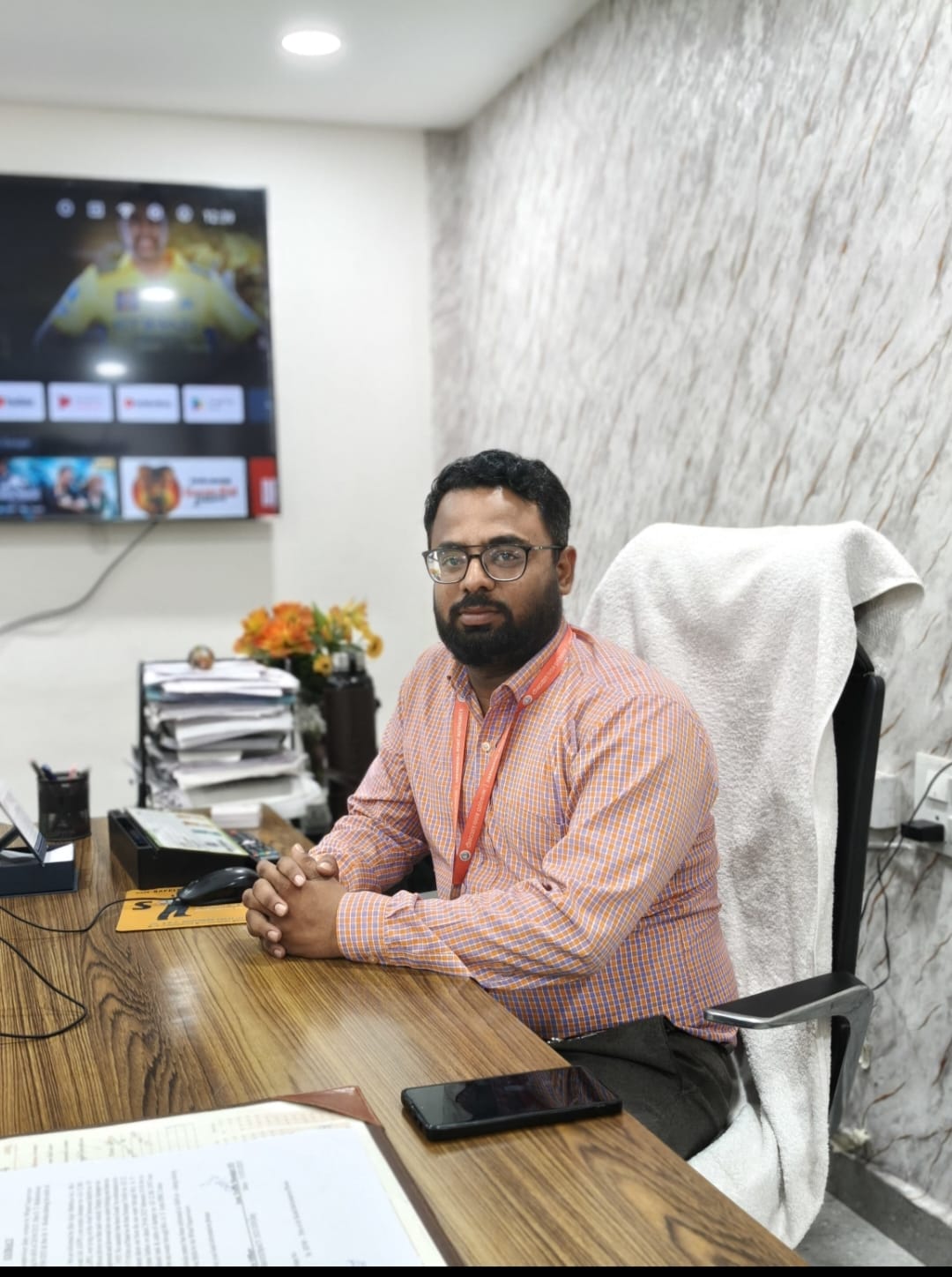
From Curiosity to Career
More Than Machines: What Mechanical Engineers Really Do Every Day
How Bhavesh Maheshwari turned his love for machines into a career focused on safety, reliability, and real-world problem solving
When students hear the term mechanical engineer, many imagine someone tightening bolts or fixing machines in a noisy workshop. But in reality, modern mechanical engineering is far more than that. It is about solving problems, improving safety, designing smarter systems, and making sure industries run smoothly behind the scenes. For Bhavesh Maheshwari, a mechanical engineer with over eight years of experience in port operations and industrial safety, engineering is not just about machines, it’s about protecting people.
Bhavesh’s interest began early. As a student, physics and mathematics fascinated him. He enjoyed understanding how forces, motion, and energy worked in the real world. Machines were not just objects to him, they were puzzles waiting to be solved. “I chose mechanical engineering because I was always curious about how machines work and how engineering solves real-world problems,” he says. That curiosity eventually led him to pursue a Bachelor of Engineering in Mechanical Engineering and later work in complex, high-risk environments such as ports and heavy industries.
What Does a Mechanical Engineer Actually Do?
Contrary to popular belief, a mechanical engineer’s day is not spent only repairing equipment.Bhavesh explains that the job involves planning, inspecting, analysing, and improving systems to ensure they are safe and efficient.At ports, for example, massive cranes, loaders, and heavy machinery operate every minute. A small failure can cause delays or even accidents. Engineers must constantly monitor performance, conduct inspections, and enforce safety standards.
In simple words, mechanical engineers check equipment health, solve technical problems, improve efficiency, ensure safety compliance and coordinate with teams. It’s a mix of thinking, designing, and decision-making not just physical work.
How Technology Is Changing Engineering
Today’s mechanical engineering is deeply connected with technology. Automation, robotics, and artificial intelligence are transforming industries. Machines now perform repetitive or dangerous tasks, while engineers focus more on design, analysis, and optimisation. “AI helps us predict failures before they happen,” Bhavesh explains. “This improves safety and reduces downtime.” This means future engineers must be comfortable not only with tools and machines, but also with software, data, and digital systems.
Beyond Factories: Where Can Mechanical Engineers Work?
Many students assume mechanical engineers only work in factories. That’s another myth. In reality, they are needed almost everywhere automotive, aerospace, power plants, renewable energy, robotics, marine systems, oil and gas, construction, and safety operations. Their skills are versatile, which allows them to adapt across industries. “Mechanical engineering opens doors to many fields,” Bhavesh says. “You’re never limited to just one path.”
Lessons from the Challenges
Engineering studies were not easy. Balancing theory, practical work, projects, and exams required discipline and time management. But those challenges helped him develop resilience and teamwork. One important lesson he shares is simple:
understand concepts, don’t just memorise. Strong fundamentals in mathematics and physics build confidence for everything that follows.
Can Engineers Help the Environment?
Absolutely. Mechanical engineers play a big role in sustainability designing energy-efficient systems, working on solar and wind power, reducing waste, and lowering emissions. By improving how machines use energy, engineers quietly contribute to protecting the planet.
Advice for Students
For students dreaming of becoming engineers, Bhavesh stresses practical experience. Workshops, internships, site visits, and real projects matter just as much as textbooks. He also warns against common mistakes ignoring safety, being overconfident, or focusing only on salary instead of learning.
His message is clear: “Focus on strong fundamentals, stay curious, and never stop learning. Engineering is about solving problems that make life safer and better.”
Final Thought
Mechanical engineering is not only about machines. It is about responsibility. Every safe elevator, working crane, running vehicle, or efficient system has an engineer behind it someone thinking ahead so others can live and work safely. And for students who enjoy solving problems and building things that matter, this field might just be the perfect path.