Partners & Collaborations
The Man Who Chose Service Over Status
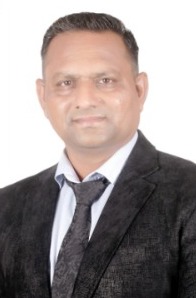
The Inspiring Journey of Ritesh Madhusudan Christian
In an age dominated by Artificial Intelligence, social media fame, and career competition, one man quietly chose a path that machines cannot replace, the path of empathy, justice, and human connection. Ritesh Madhusudan Christian, Social Worker (B.S.W., M.S.W., PGDHRD), District President of the International Human Rights Protection Council (Kutch), Board Director at YMCA Gandhidham, former MSW Lecturer, National Trainer, Counsellor, and Motivational Speaker, is a name rooted not in titles, but in service. But what makes his story different is not just what he has done, it is why he chose to do it.
From Classroom to Community: When Teaching Meets Real Life
For seven years, Ritesh served as a Lecturer in MSW College in Anand. Yet, he believes textbooks alone cannot shape minds. “We are surrounded by AI. Information is available everywhere. But emotions, forgiveness, and love cannot be downloaded,” he says. His field experience, working with Dalits, manual scavengers, HIV-positive individuals, youth, and minorities, transformed his teaching style. Real-life case studies replaced abstract theories. Students did not just learn social work, they understood human struggle. His dissertation on Legal Awareness among Dalits, conducted in collaboration with Navsarjan Dalit Shakti Kendra, Sanand, strengthened his grassroots understanding of social justice.
What Is Social Work in Simple Words?
Ritesh simplifies social work beautifully: “It is not about feeding someone daily. It is about teaching them how to cook.” Social work, according to Stroup (1960), is helping people help themselves using scientific methods. He explains that social work has six core pillars: Working with individuals, working with groups, working with communities, administration, research, and social action (like Gandhiji’s Satyagraha). From NGOs to government roles, HR management to counselling, and rural development to corporate CSR, social work is both humanitarian and managerial.
Youth Today: The Screen Generation
Ritesh observes clear behavioural shifts among: Generation Z and Generation Alpha. Constant digital exposure has improved access to knowledge but reduced attention span and increased anxiety. He warns students to reduce unnecessary screen time, avoid addictive social media patterns, choose friends wisely, build real-life skills (music, sports, cooking, repairing, and reading), and spend time with parents. “Stress is often external. Anxiety and depression are internal,” he explains. His advice is simple but powerful: Healthy habits build a healthy mind.
A Case That Changed Him Forever
In 2008, while working with GSNP+ (Gujarat State Network of People Living with HIV), Ritesh encountered a case that reshaped his understanding of society. A young bride discovered she was HIV positive months after marriage. Later, she learned that her husband and his family knew about his HIV status before the wedding but hid it.
Broken and betrayed, she considered ending her life. Instead, she chose courage. She joined awareness campaigns to prevent other girls from facing similar deception. For Ritesh, this was more than a case study. It was a painful reminder: Society’s silence can sometimes be crueler than the disease itself.
Emotional Awareness in Schools: Why It Matters
Ritesh conducts teacher trainings and sensitization programs. He believes education must not create “robots who memorise,” but thinkers who question. He highlights a disturbing January 2026 incident in Gujarat, where a student slapped a teacher for questioning him. “What went wrong?” he asks. According to him, declining emotional awareness, broken family dialogue, and weakening respect systems contribute to such behavioural crises. He argues that investing ₹500–₹1000 more in retaining a good teacher may
Skills Over Marks
For students considering MSW or social work: “Marks are printed on paper. Skills justify them.”
Essential skills include: Communication, Counselling, Emotional intelligence, data analysis, conflict resolution, media handling, and working with victims and vulnerable groups. Social work demands courage, empathy, and professionalism.
The Personal Sacrifice That Defines Him
Perhaps the most touching chapter of his life is not professional but personal. When his daughter Atira turned one, he left his administrative job to become a full-time caregiver for four years. His wife, Nimiksha, serves as an Establishment/HR officer in PGVCL. Choosing fatherhood over salary was not easy. He cooked, managed the home, and continued social work activities. “I salute all mothers,” he says. “Women’s Day should not be one day, it should be every day.” Today, though restarting his career after a gap is challenging, he feels proud of the values nurtured in his daughter.
His Message to Students
If he had to give one life lesson: Don’t hide your pain. Talk to your parents or mentors. Do not choose suicide in moments of failure, and respect those who sacrificed for you. He shares a powerful reminder: “You have 86,400 seconds every day. Someone may look for one mistake to pull you down. Use your time wisely.”
Final Reflection
In a world chasing speed, Ritesh Madhusudan Christian chose depth. In a world chasing money, he chose meaning. In a world guided by algorithms, he chose empathy. His journey teaches us: Success is not only about earning. It is about impacting lives, including your own family.
save and shape 10 students each year. Education must be student-centric, value-based, and emotionally intelligent.